Louvres
Louvres, from Mediterranean tradition to contemporary design
Louvres are the most classic shutters in existence, and are a distinctive sign of traditional Mediterranean architecture. For centuries and still today, these wooden slatted shutters have been used to protect houses from noise and inclement weather, as well as to filter light and preserve the privacy of the home.
A louvre is characterized by its horizontal slats, which in some cases can be adjusted to let in more or less light. They are usually folding, although there are also sliding or hinged louvres, which allows for a wide variety of combinations on the façade.
The main advantage of the louvred shutter, which can be used both as protection for windows and glazed doors, is that, when combined with the glass enclosure, it allows different atmospheres to be created and adapts the dwelling to the outside climate. Indeed, the louvred shutter is the perfect exterior enclosure (especially in the dry heat of the Mediterranean climate) as the glazed window is left open, allowing the wind to pass through the slats, which in turn filter the light, avoiding glare and creating a warm and calm atmosphere. Solar protection and ventilation for greater comfort. In winter, on the other hand, these slatted enclosures serve to protect from wind and rain, as well as to prevent heat loss.
Improved energy efficiency thanks to louvred shutters.
The architectural tradition of the louvred window or door is still very interesting today, because of its contribution to greater energy efficiency. Louvred shutters are a passive system which, when used properly, can represent an energy saving of up to 30% in the air conditioning of the building. Compared to opaque shutters, which are more common in Nordic construction, this slatted louvre is preferable as it allows light and air to pass through, favouring privacy and the protection of the carpentry.
Wooden louvres: a very modern traditional element
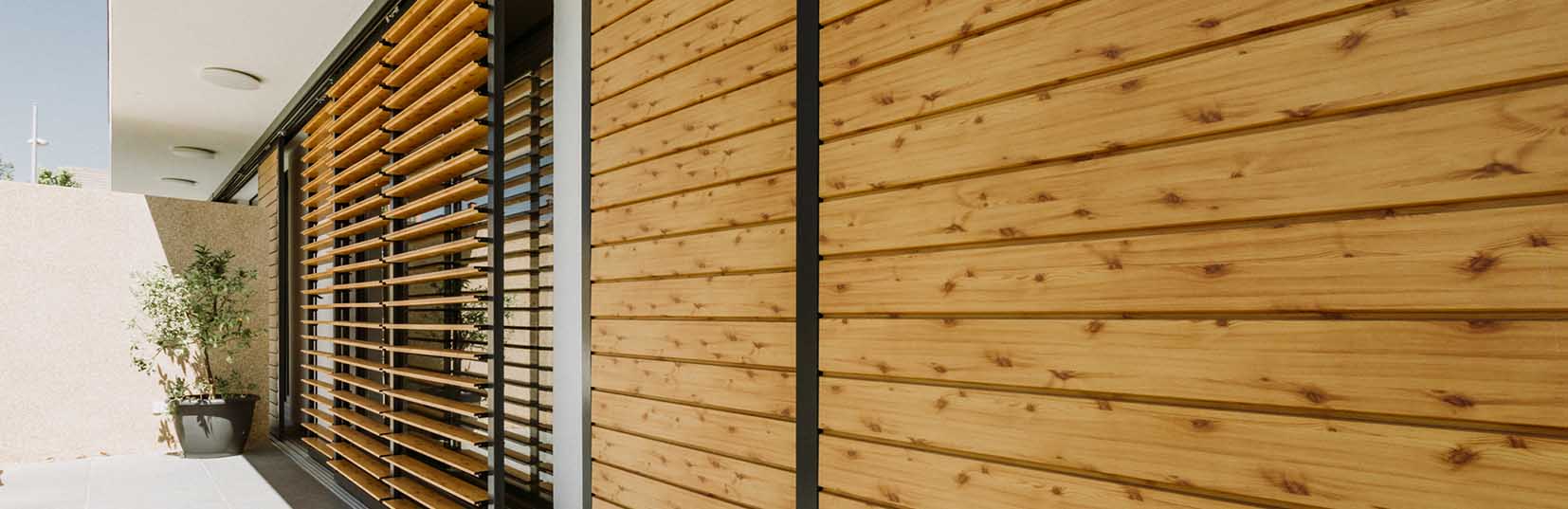
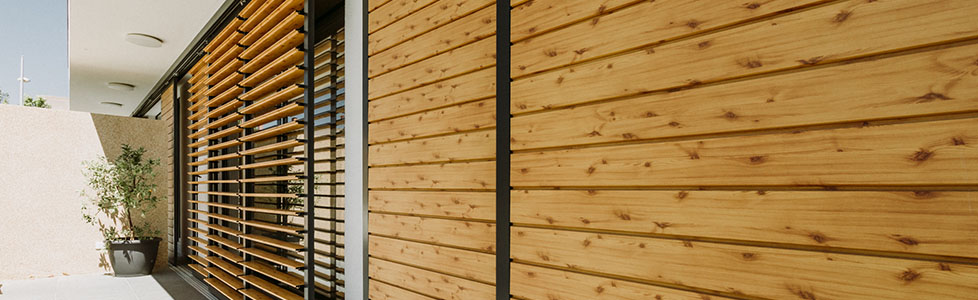
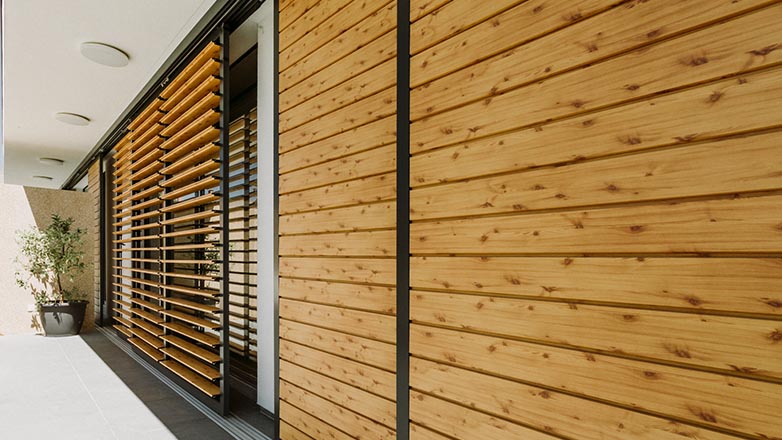
Wooden louvres are the most common type of shutters. They are very versatile in the composition of façades and in the creation of interior ambiances. In addition to the energy efficiency of the system, the sustainability of wood as a material is an element to be valued when choosing construction elements.
The wooden louvre allows for a lot of aesthetic play, as it traditionally tends to provide an element of colour to façades, although it also serves as a contrast to materials such as stone, ceramics and even metal, providing warmth to living spaces. Among the wood options offered by TAMILUZ is thermo-treated wood, which has a high added value due to its durability and low maintenance requirements. These wooden shutters can be the perfect enclosure for renovation works, preserving a traditional image but with efficient characteristics.
Aluminium louvres: the rebirth of a classic.
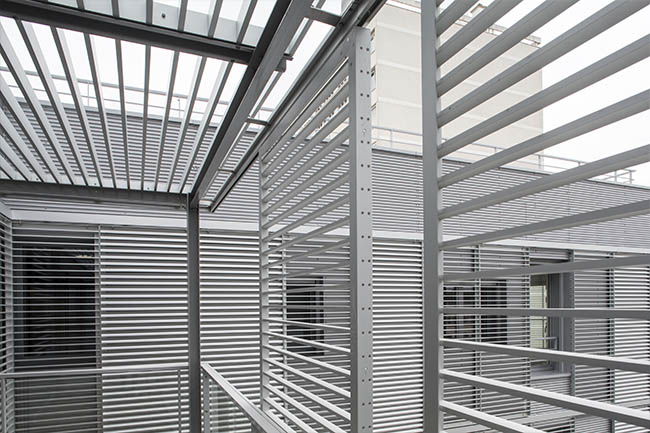
Aware of the functional interest of this system for projects of all styles, TAMILUZ modernizes and reinvents the louvre by offering architecture professionals the design and customized conception of aluminium shutters in a wide range of colours and finishes. This type of shutter benefits from the inherent inalterability of the material, enhanced by the most modern lacquering techniques. Aesthetically, these metal shutters can be perfect for adding a sense of lightness and modernity to traditional louvres. We recommend them for architectural projects with a more minimalist and industrial style, especially when combined with exposed concrete or treated stone finishes. They are widespread for protecting balconies or ground floors with large glazed surfaces.
A louvred shutter for every project, in new construction and renovation.
Although they are mainly used as solar protection for dwellings, louvred shutters can add value to commercial projects or office or hospitality environments, as passive climate systems can represent up to 30% energy savings.
On the other hand, the versatility of louvred shutters in terms of materials, but also in terms of construction systems, means that they can be used in a wide variety of environments, both in new construction and renovation. In the latter field, a relatively limited intervention can mean an absolute transformation of the façade of a building. If we add to this a notable improvement in energy efficiency, we are talking about an immediate revaluation of the whole.
If traditional louvred shutters are common on balconies and windows in residential projects, discover the TAMILUZ proposals for aluminium sliding shutters as a key element in offices with a modern aesthetic, or why not sliding shutters in white to close the balconies of a charming hotel on the Mediterranean coast?
Thus, after many centuries of tradition, the louvred shutter system is still one of the most successful and interesting options when it comes to window enclosures. On the one hand, they have enormous variability in terms of materiality, design and systems that allow them to adapt to different aesthetics, styles and budgets. There is practically a louvred window for every project, and their constant reinvention is what allows them to continue to provide architects with a lot of possibilities today. Moreover, at a time when the incorporation of passive systems and intelligent climatic design is becoming more and more important, louvred shutters stand out as an ancestral climate protection technique that is still valid today.